A planning resource, not a compliance plan: This guide is for early project planning. It is not legal advice, a jobsite safety plan, a material certification, or a statement that a photo or video proves compliance. California requirements and rulemaking can change; confirm the current rule with the employer’s EHS and legal advisers.
If engineered stone may be part of a project, the useful conversation starts before a slab is released, a fabrication date is set, or a crew arrives on site. Ask what material is under consideration, what work it will require, who owns the work conditions, and what could change if California’s rules move again.
That is not a reason to make every material conversation fearful. It is a reason to make it earlier and more specific.
Why this belongs in the planning conversation
Material selection is not only an aesthetic choice. It influences what a fabrication partner needs to understand, what a project team must coordinate, and what questions cannot be left for the field.
For a designer or GC, the useful early question is not, “Is this material good or bad?” It is: What does this exact material and this exact scope require us to resolve before fabrication and installation?
That framing leaves room for the facts that change from one project to another: the material composition, the work planned in the shop and in the field, the sequence around adjacent trades, and the current rules that apply to the employer doing the work.
What California’s current silica rule requires
California’s respirable-crystalline-silica standard applies to occupational exposure and assigns duties to employers. For certain high-exposure stone-fabrication tasks, it requires effective wet methods. The standard also restricts dry sweeping, dry brushing, and compressed-air cleanup when they could contribute to exposure, except in the limited circumstances stated in the rule. Depending on the work, employers may also need exposure assessment, a written exposure-control plan, respiratory protection, training, and medical-surveillance measures.
Those are not boxes a design team can check from a finish schedule. They are reasons to ask the fabricator and each employer involved how the work will be planned and controlled. Read the current text of California Code of Regulations, Title 8, section 5204.
A proposed engineered-stone restriction is still moving through rulemaking
As of September 20, 2026, Cal/OSHA has published a discussion draft for comment that would prohibit the fabrication and manufacture of artificial stone containing more than 1% crystalline silica. It is not a final rule or an effective prohibition. Its status is material to a project conversation precisely because it may change.
Use the official Cal/OSHA rulemaking page as the source of truth before treating any requirement, deadline, or availability implication as current.
Five questions worth asking before the work is locked in
1. What is the exact material under consideration?
“Engineered stone” is not enough detail for a planning conversation. Ask the supplier or manufacturer for the material information the project team and fabricator need to understand what is being specified.
2. What work is expected in the shop, and what work is expected in the field?
Bring the drawings, relevant details, and schedule forward early. The point is not to prescribe a method from a conference table. It is to identify where fabrication, fit, access, sequencing, or a late change could alter the work.
3. Who owns the conditions for each task?
The employer performing the task is responsible for its applicable workplace controls. A GC, designer, fabricator, installer, and supplier may each have information the others need, but no one should assume that another party has resolved the question.
4. What can be resolved before anyone reaches the site?
Late field changes are hard on every trade. Clear dimensions, material decisions, transitions, access, and coordination do not replace an employer’s safety obligations, but they can reduce avoidable uncertainty when work reaches the shop or jobsite.
5. What will the team revisit if the rule or material information changes?
Set an owner for that check. A current Cal/OSHA page, a manufacturer record, and the actual project scope are better inputs than an old email or a generic assumption.
What a shop visit can—and cannot—tell you
A shop visit is worthwhile when it leads to better questions. You can see how material moves through a facility, how people and equipment share space, and how a team talks about its work. You should also ask the fabricator how it approaches the material and tasks on your project, how it plans the work, and who can answer EHS questions.
A visit, photo, or video cannot certify a facility’s compliance, establish the right control for a particular task, or replace current review by the employer and its qualified advisers.
A look inside Fox’s Richmond facility
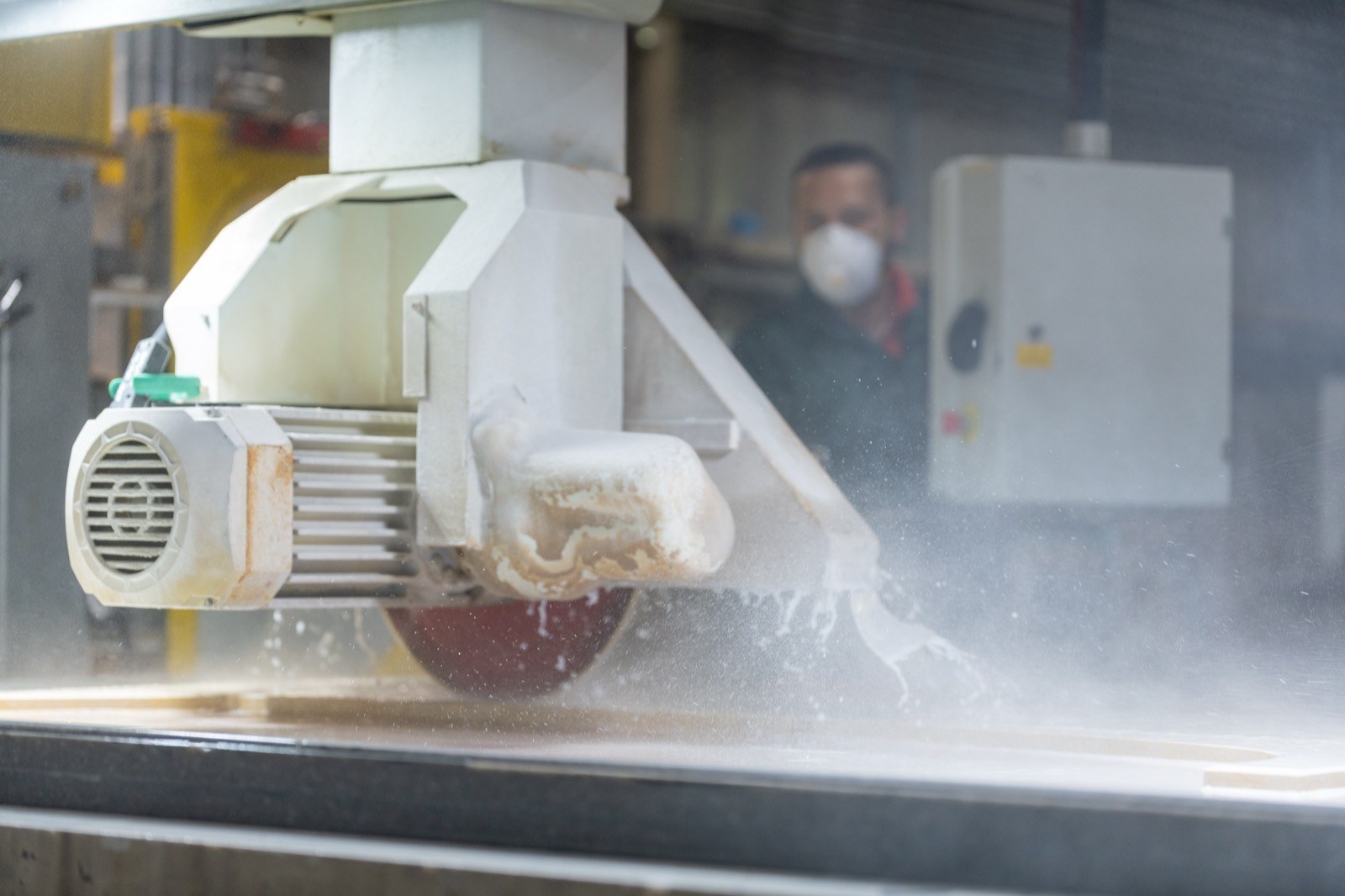
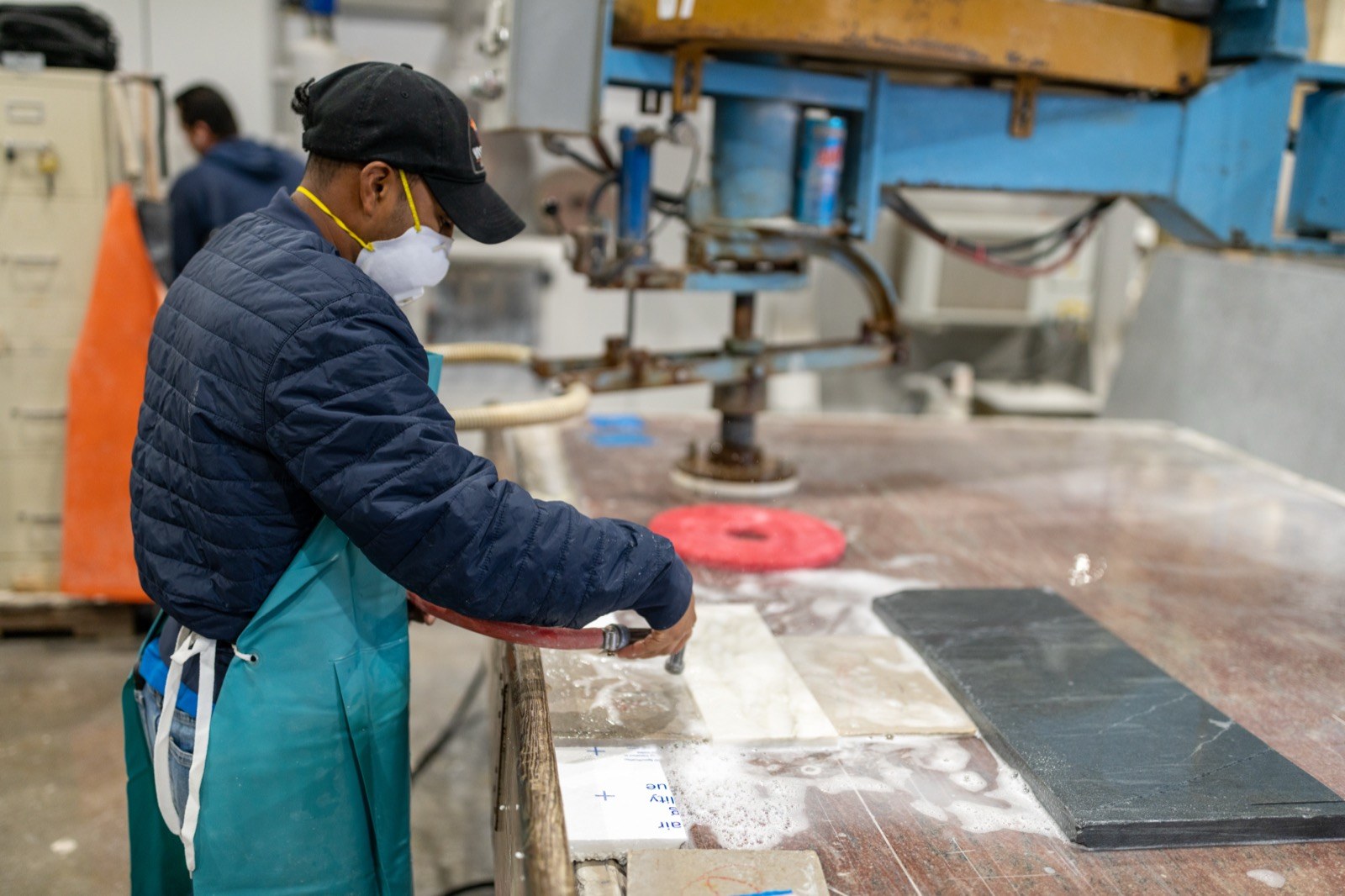
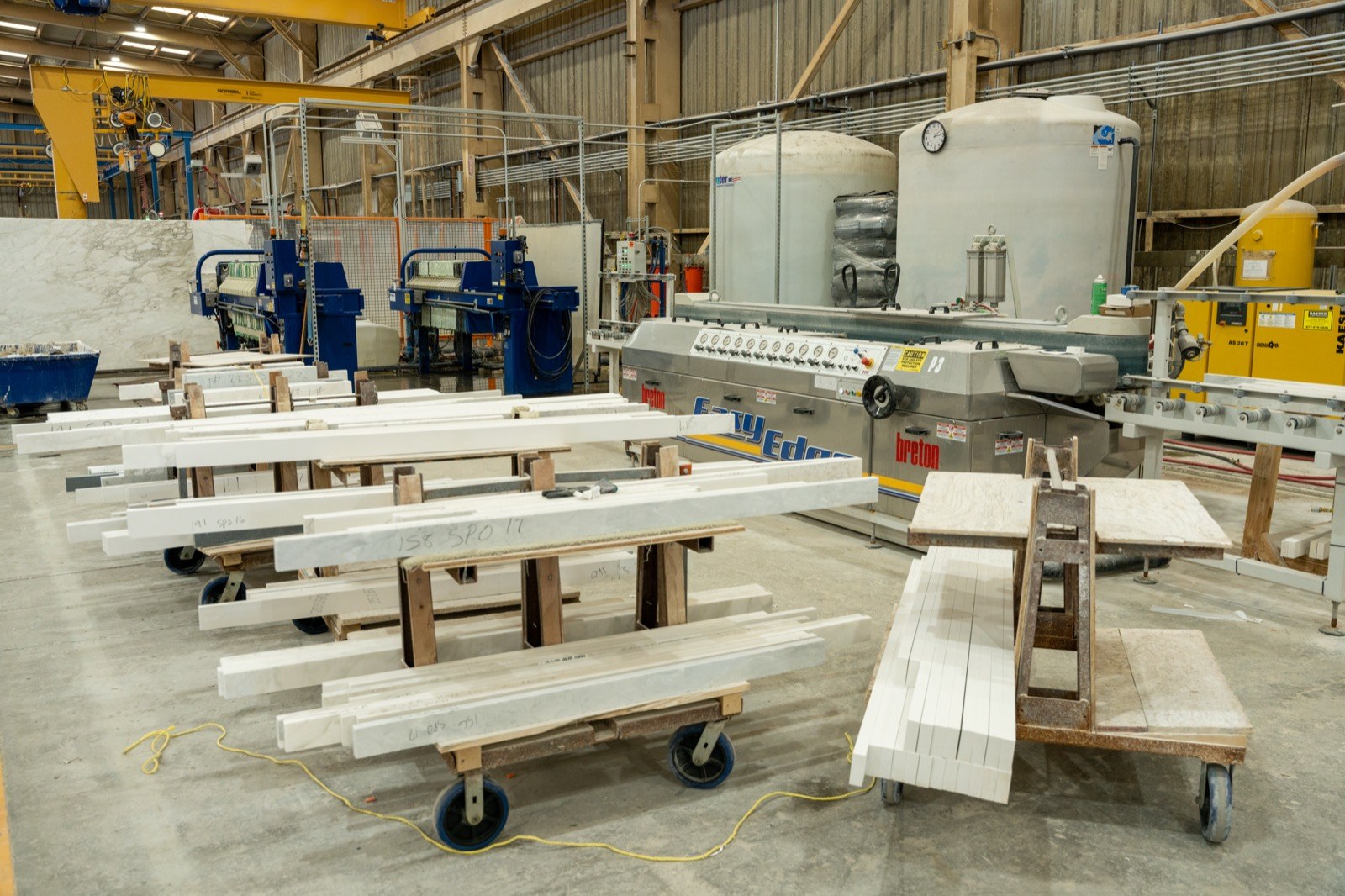
*Richmond fabrication facility* (0:56) shows the Fox facility, material storage, shop circulation, fabrication and finishing activity, and portions of a work area where water is visible. It gives project teams a grounded look at the place where stone work happens.
The film has no spoken narration and is presented without autoplay, a third-party player, lead capture, or a claim-heavy overlay.
How Fox approaches the conversation
Fox and Fireclay bring deep environmental-health-and-safety experience to this work. We work with certified third parties on respiratory and environmental health, and with OSHA representatives, facility partners, vendors, and other partners to keep our practices and equipment aligned with the work in front of us. We follow these regulations closely.
Our role is to advise and consult early: understand the material, the drawing, the fabrication and field questions, and the conditions that may change the plan. We are also actively evaluating material options containing less than 1% crystalline silica. That does not make a material decision for a project. It gives the project team a reason to start the conversation before the decision is expensive to reverse.
Frequently asked questions
Is California’s proposed 1% artificial-stone restriction already in force?
No. As of September 20, 2026, Cal/OSHA’s material is a discussion draft in an active rulemaking process. Check the official rulemaking page before relying on this status for a live project.
Does this guide tell a contractor how to comply with silica rules?
No. It identifies planning questions. Employers need to determine the applicable requirements, controls, training, respiratory protection, monitoring, and other measures for their actual work.
Can a facility photo or tour replace a project-specific safety review?
No. It can show how a fabrication partner approaches its work, but the exact material, task, conditions, and employer responsibilities still matter on every project.
Should a project team avoid all field work on stone?
The right scope depends on the material, design, access, sequencing, and the employer’s work plan. The useful move is to surface anticipated field work early so the responsible parties can plan it correctly.
Related next steps
- Discuss a material and fabrication question: Call Fox or email info@foxmarble.com.
- For project teams: Explore Fox’s current professional resources for architects, designers, and general contractors.
- Official reference: California’s respirable crystalline silica standard and current artificial-stone rulemaking materials.